



CAPLAN’S APPLIANCES | BUYING GUIDE
Laundry Buying Guide
An honest, expert-led guide to choosing the right washer and dryer for your home, lifestyle, space, and long-term needs.
CHOOSE YOUR PATH
Everything you need, organized by decision.
This guide covers everything you need to make a confident decision on a washer and dryer. Whether you’re replacing a machine or buying for the first time, we’ve written it to give you the real information — not a sales pitch.
Jump Ahead
Already know what you need? Go directly to the decision that matters most.
SECTION 01
Understand Your Space.
A little prep at home makes the whole process smoother. Before shopping, confirm your measurements, hookups, venting, doorways, and clearance.
What does a 240V dryer outlet look like?
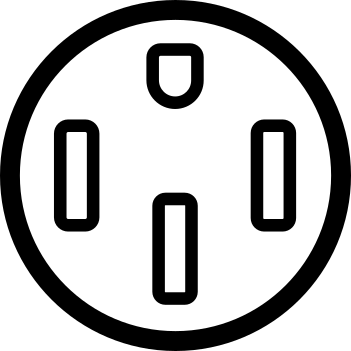
A dryer outlet is noticebly larger than a standard wall outlet, usaully with 3 or 4 larger prongs. Take a photo before visiting the showroom.
Expert note
One of the most common mistakes is measuring only the appliance opening, without accounting for hose depth, venting clearance, or delivery path.
Measure width, depth, and height
Account for cabinetry, trim, doors, and back clearance.
Check dryer hookup
Confirm gas vs. electric and whether you have a 240V outlet.
Look for a vent
No exterior dryer vent changes your dryer options completely.
SECTION 02
Stack or Side-by-Side?
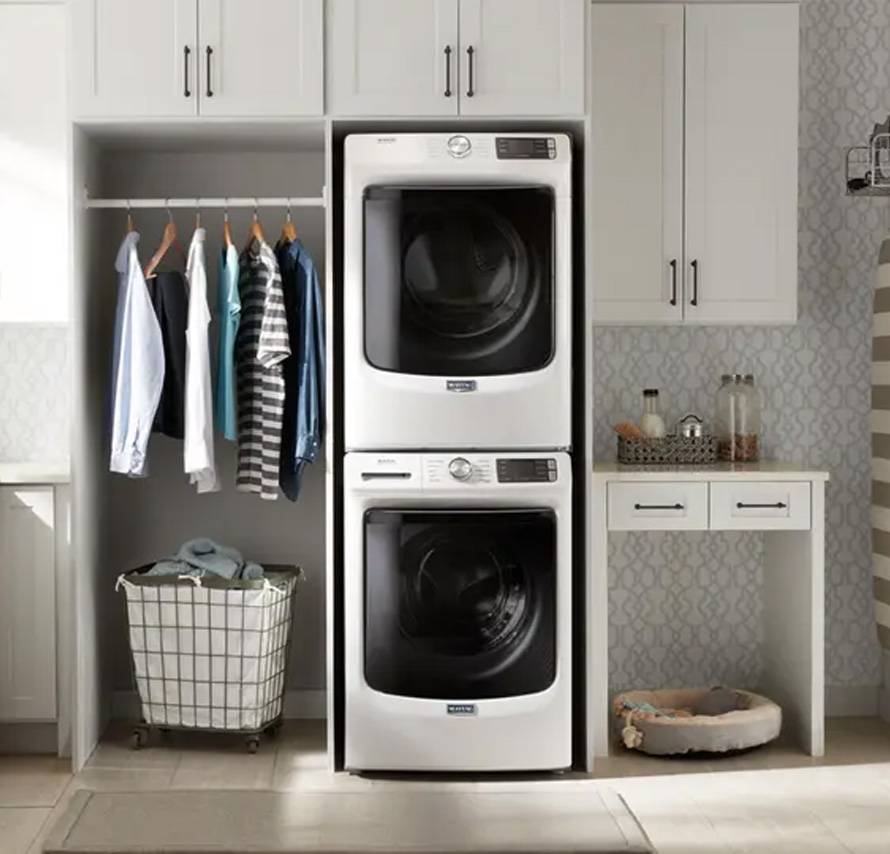
A stacked unit is a washer and dryer setup where the dryer sits directly on top of the washer — taking up half the floor space of a side by side setup. Stacks come in two forms — a tower unit (single purpose-built appliance where washer and dryer are permanently joined), or two separate machines configured as a stackable washer and dryer using a stacking kit.
Not every machine can be stacked — manufacturers engineer specific models to work together, and using mismatched brands or models can create safety issues or void your warranty. Always confirm compatibility before buying two separate machines with the intention of stacking them.
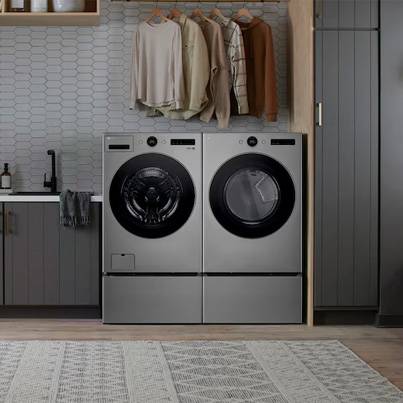
Side by side sits lower to the ground, making it easier to load and more comfortable for most people day to day. Side by side needs more floor width; a stack needs more ceiling height — know which constraint you’re actually working with.
What is a stacking kit?
A stacking kit is a metal bracket that locks the dryer securely on top of the washer. Without it, a dryer on a vibrating washer is a serious safety hazard. Think of it like shelf brackets — a small part doing a critical job. In most cases the kit has to be from the same brand as your machines.
What is a pedestal?
Pedestals are optional bases that raise machines 12–15 inches off the floor — worth it for anyone who finds bending uncomfortable.
TIGHT SPACES
Stacked
Best for condos, closets, and narrow rooms. Requires compatible machines and a manufacturer-approved stacking kit.
– Saves floor space
– Can be 65–80 inches tall
– Dryer controls may sit high
COMFORT
LARGER SPACES
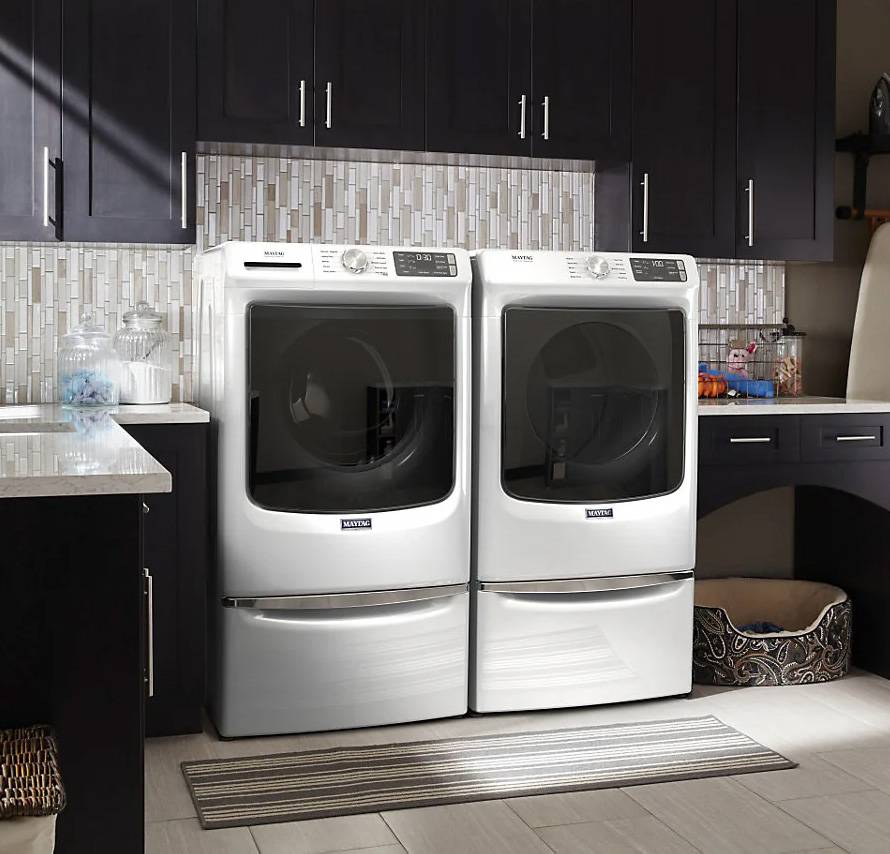
Side-by-Side
Best for comfort, accessibility, and larger laundry rooms. Optional pedestals can raise appliances for easier loading.
– Easier day-to-day access
– Requires 48–54 inches of width
– Allows folding surface above
SECTION 03
Front Load vs. Top Load Washers
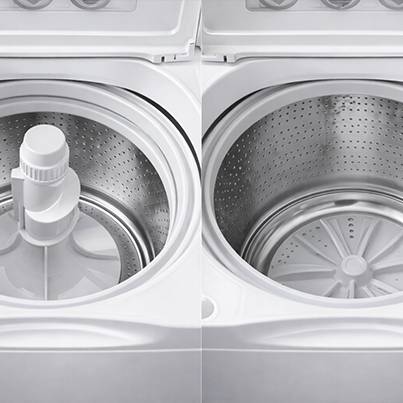
A front loader is a washing machine where you load clothes through a door on the front — the drum sits horizontally and tumbles clothes through water rather than submerging them with an agitator. A top loader is a washing machine where you load your clothes from the top — the lid opens upward and the drum sits vertically inside the machine.
What is an agitator?
The agitator is the central pole or fin system in a top-loading drum. It twists and reverses to push clothes through water — effective cleaning, but stressful on delicates. If you’ve ever pulled something delicate from a top loader and found it stretched or snagged — the agitator was likely the cause. Some newer top loaders use a flatter impeller plate instead, which is much gentler.
Why do front loaders get moldy?
The rubber gasket around the door creates an airtight seal — great for preventing leaks, but it traps leftover moisture and detergent residue. Over time, that grows mold and causes odour. One habit prevents this entirely: leave the door ajar after every wash. If you live alone or know your household will do this consistently, a front loader is a great choice. If not, a top loader may just be the more practical call for your home.
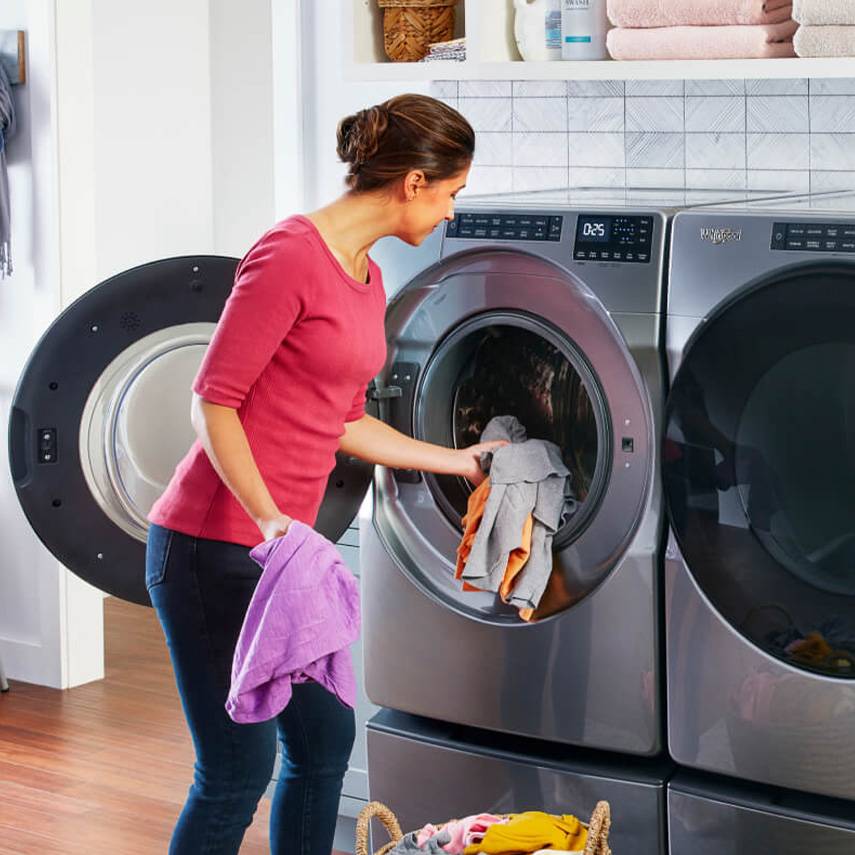
FRONT LOAD
A front loader is a washing machine where you load clothes through a door on the front — the drum sits horizontally and tumbles clothes through water rather than submerging them with an agitator
- Front loaders use less water and energy per load than a top loader
- No agitator means a gentler tumbling action — much better for delicates and fine fabrics
- Faster spin speeds mean clothes come out drier, spending less time — and energy — in the dryer
- The rubber door seal can trap moisture and cause mold and odour if the door isn’t left open after use. The fix is simple: leave the door ajar after every wash.
- Most modern washers include a drain pump filter — a small trap that catches lint, coins, and debris. Running it every few weeks keeps the machine draining cleanly.
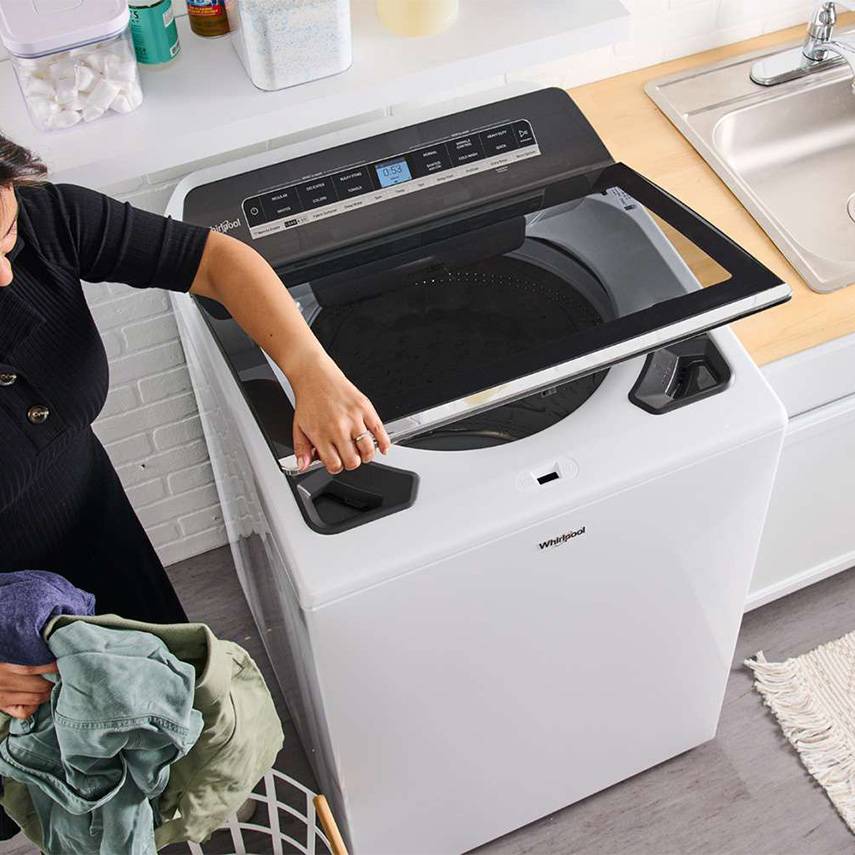
TOP LOAD
A top loader is a washing machine where you load your clothes from the top — the lid opens upward and the drum sits vertically inside the machine
- Top loaders are familiar and straightforward
- Top loaders are used commercially because they handle multiple heavy loads a day without issue
- They use more water per cycle and are less energy efficient than front loaders
- The agitator — the pole in the centre of a top-load drum — is effective, but it is hard on delicate fabrics
- Traditional top loaders with a full agitator are more aggressive on clothes — great for heavily soiled loads, tougher on delicates
High-efficiency (HE) top loaders
These top loaders use significantly less water— comparable to front loaders — but the reduced water volume can cause more wrinkles in some fabrics
SECTION 04
Compact vs. Full Size
Three inches of width can change everything. Compact machines are typically 24 inches wide and ideal for condos or closets; full-size machines are usually 27 inches wide and better suited to larger households.
The machine body is the full exterior of the appliance. The drum is the circular tub inside where your clothes actually go. A compact machine has a smaller exterior but the drum size varies by model.
Think beyond fit
Match capacity to laundry frequency, not just available space.
How to measure your space

Make sure to measure your space for all three dimensions — width, depth, and height. Compact machines range from 23.5 to 27 inches in depth, 33 to 36 inches in height. Full size machines run 31 to 35 inches in depth, 38 to 44 inches tall.
When does compact become a real limitation?
Compact works well for 1–2 person households doing laundry regularly. For a family of 4 washing sports uniforms, towels, and bedding every week, it will feel like a constraint. Think about load size and frequency, not just whether the machine fits in your laundry room. A machine that technically fits your closet but can’t keep up with your household is the wrong machine.
24-inch compact
Best for condos, apartments, and laundry closets.
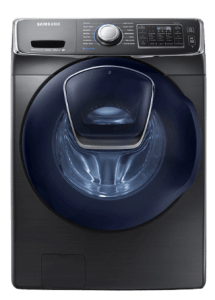
27-inch full size
Best for families, bedding, and larger weekly loads.
What does 24 vs. 27 inches actually look like?
A standard interior doorway is about 32 inches wide. Two compact machines side by side span 48 inches. Two full-size machines span 54 inches.
If your laundry hookup is inside a standard closet, a full-size machine likely won’t fit. Compact is often the only option in those spaces — which isn’t a bad thing, just a real constraint worth knowing.
SECTION 05
Dryer Types: Vented, Condensation & Heat Pump
Your home usually answers this question for you. If there is no exterior dryer vent, you are likely looking at a ventless solution.
What does 'recycled air' actually mean for you?
A vented dryer sends energy outside with every load — constantly pulling from your home and exhausting heat. A heat pump dryer keeps that energy in the loop, using it again and again. Over a year of regular use, the difference in your hydro shows up. If you run 6 loads a week, a heat pump dryer could save you $100–$150 a year in electricity versus a vented dryer — and the gentler heat means your clothes hold up better wash after wash.
The key difference between condensation and heat pump?
A condensation dryer uses a heating element and then cools the moist air to extract water — effective but uses more energy. A heat pump dryer uses a refrigerant system to recycle warm air — significantly more efficient and gentler on fabrics, but slower.
Vented vs. condensation — what actually happens inside?
A vented dryer works like a bathroom exhaust fan — hot moist air goes straight outside. A condensation dryer cools that air internally, turning the moisture into water, then drains it away or collects it in a removable tank. If your condensation dryer has a tank: remember to empty it after every load. Models that drain directly into a standpipe are far more convenient day-to-day — and worth the ask.
Gas dryer vs. electric — dryers come in both versions.
If your home has a gas line it may be worth asking about — gas dryers are cheaper to run long term and tend to dry faster. If you’re in a condo or newer build, you’re almost certainly on electric.
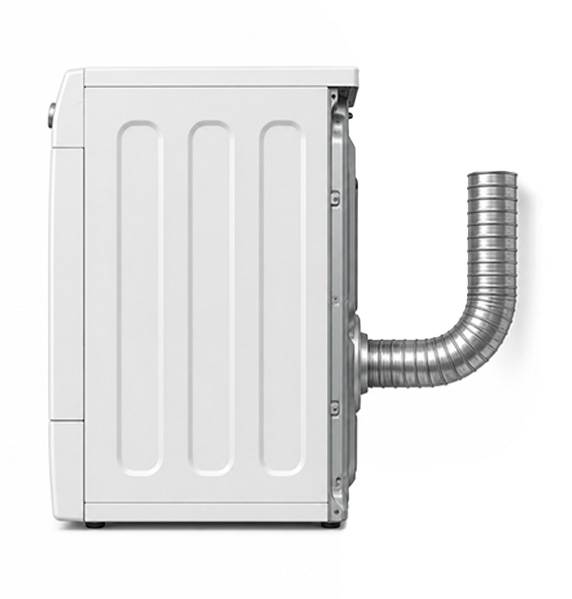
VENTED
BEST FOR
Traditional laundry rooms with exterior venting
TRADE-OFF
Requires ductwork
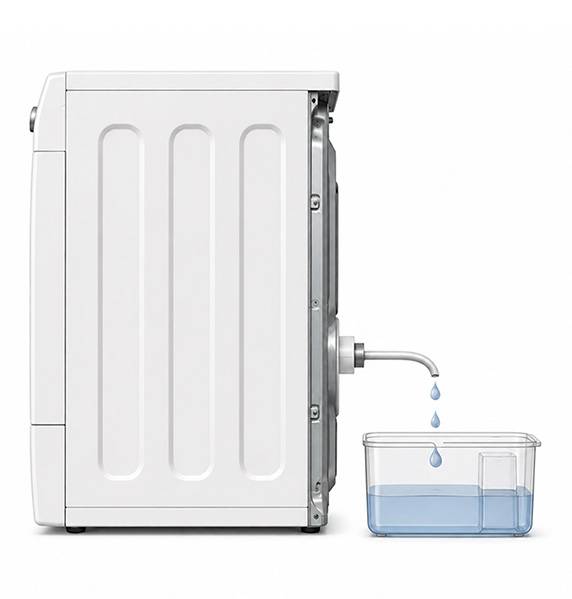
CONDENSATION
BEST FOR
Ventless installs where exterior ducting is unavailable
TRADE-OFF
Slower and may release moisture
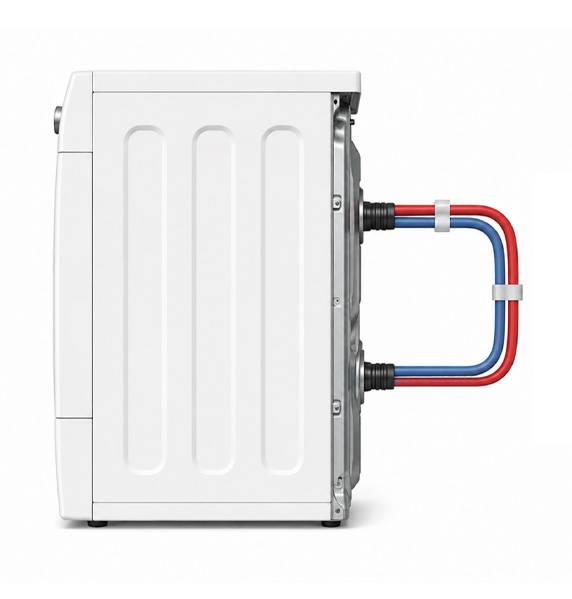
HEAT PUMP
BEST FOR
Energy efficiency, condos, fabric care
TRADE-OFF
Higher upfront cost and longer cycles
SECTION 06
Drum Size: How Much Space Do You Actually Need?
Bigger is not always better. The right drum size depends on household size, load frequency, bedding, sports gear, and how full you typically load the machine.
What is the three-quarters rule?
Fill the drum about ¾ of the way for best cleaning results. Too full and clothes can’t move freely; too empty and the load goes off-balance during the spin.
Quick sizing guide
Think about how many loads you do per week and how large they typically are. Running big loads in an undersized drum stresses the machine. Running tiny loads in an oversized drum causes imbalance issues.
1–2 people
2.3 cu. ft.+ is usually plenty for regular smaller loads.
Family of 4
4.7 cu. ft. is a useful starting point.
Family of 5+
5.0 cu. ft.+ helps reduce weekly load count.
SECTION 07
Brand Guide
The best laundry brand isn’t necessarily the most expensive—it’s the one that aligns with your priorities. Whether you’re looking for premium fabric care, long-term reliability, smart technology, or maximum value, this guide highlights the strengths, positioning, and ideal customer for each leading manufacturer.
$$$$ · Germany
Miele
Best for long-term ownership, condos, premium fabric care, and heat pump drying.
$$$ · Germany
Bosch
Best for quiet operation and European quality at a mid-premium budget.
$$-$$$ · South Korea
LG
Best for smart technology, quiet operation, and large-capacity family laundry.
$-$$ · USA
Whirlpool
Dependable everyday reliability across a wide range of price points.
$$ · USA
Maytag
Best for pet owners, tough stains, and practical household durability.
$$$ · USA
Huebsch
Best for high-volume households that want commercial-grade simplicity.
SECTION 08
Caplan’s Top Picks
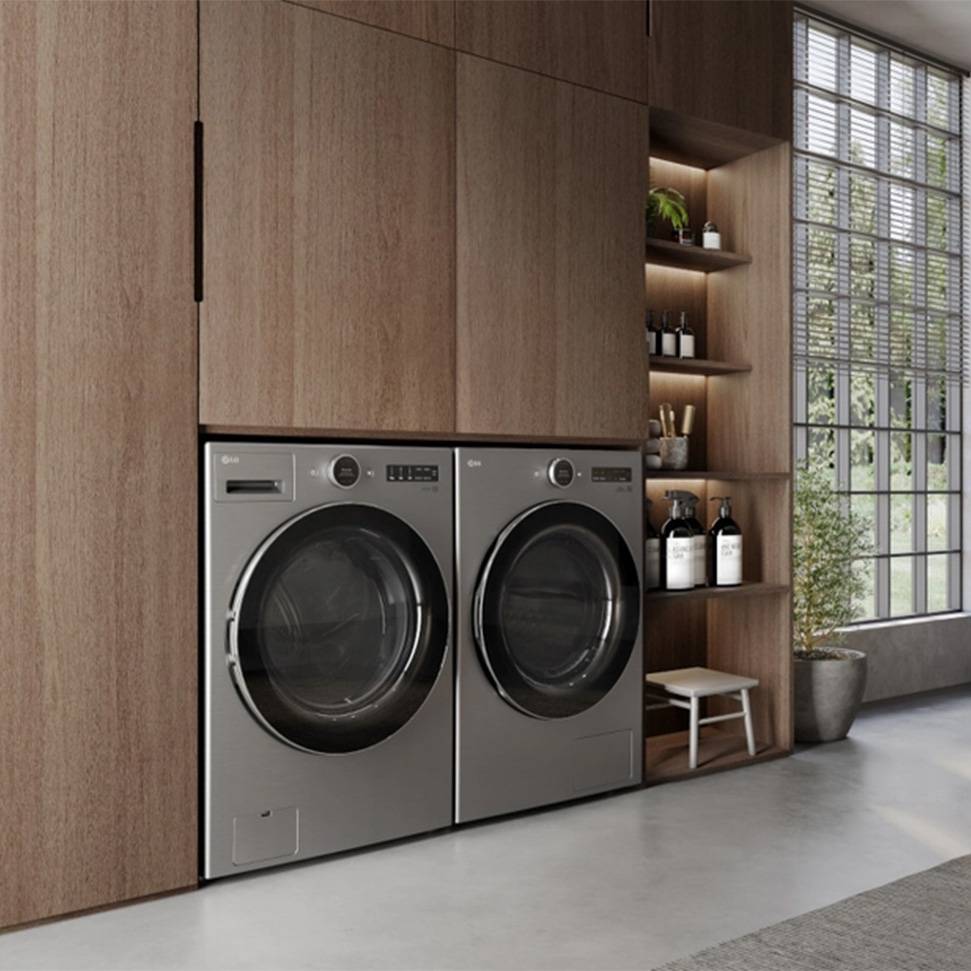
Best Large Capacity
LG WM5800HVA
5.8 cu. ft. mega capacity, TurboWash 360°, AI DD, and Allergiene steam cycle.
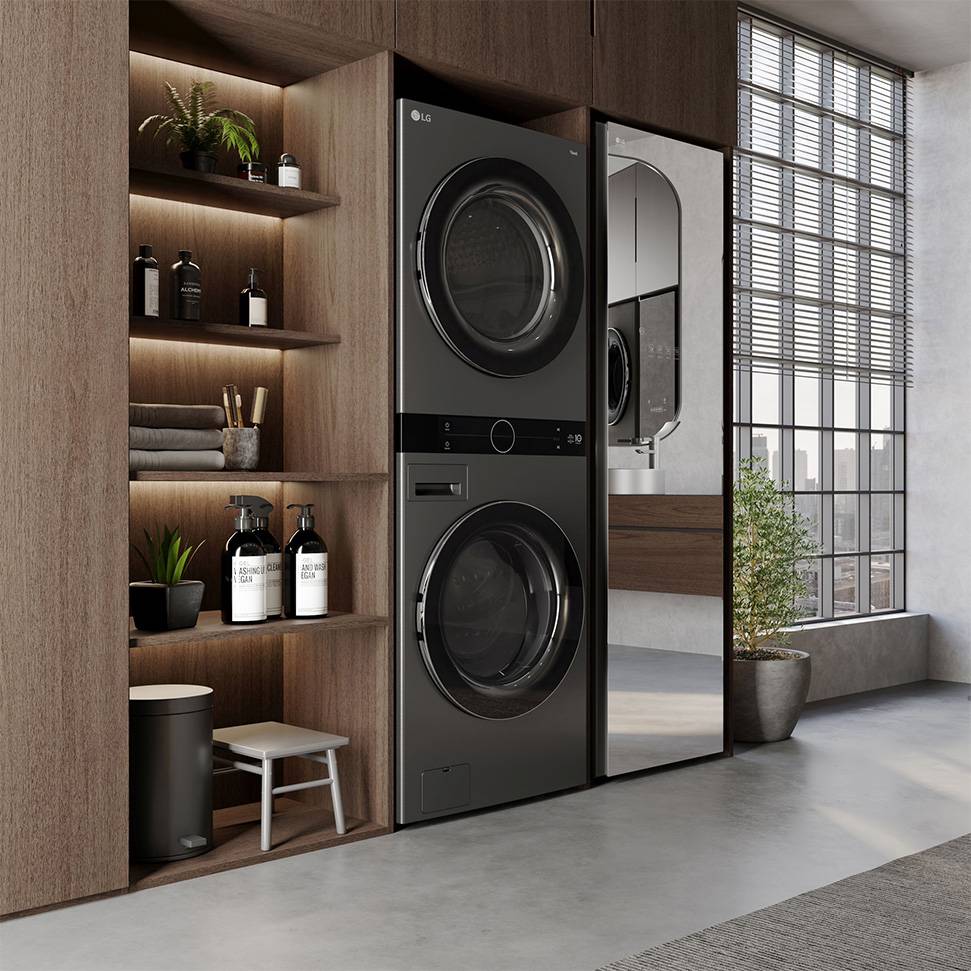
Best Stacked Solution
LG WashTower
Integrated vertical format with centre controls and smart cycle pairing.
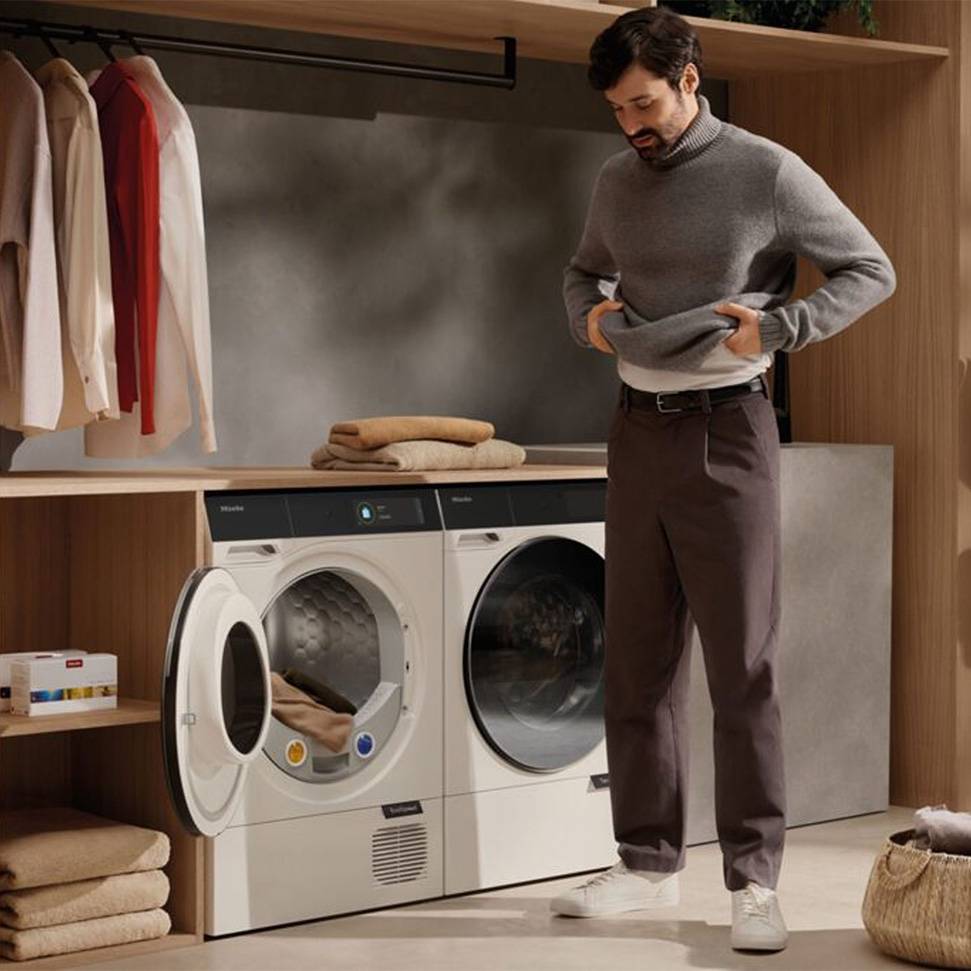
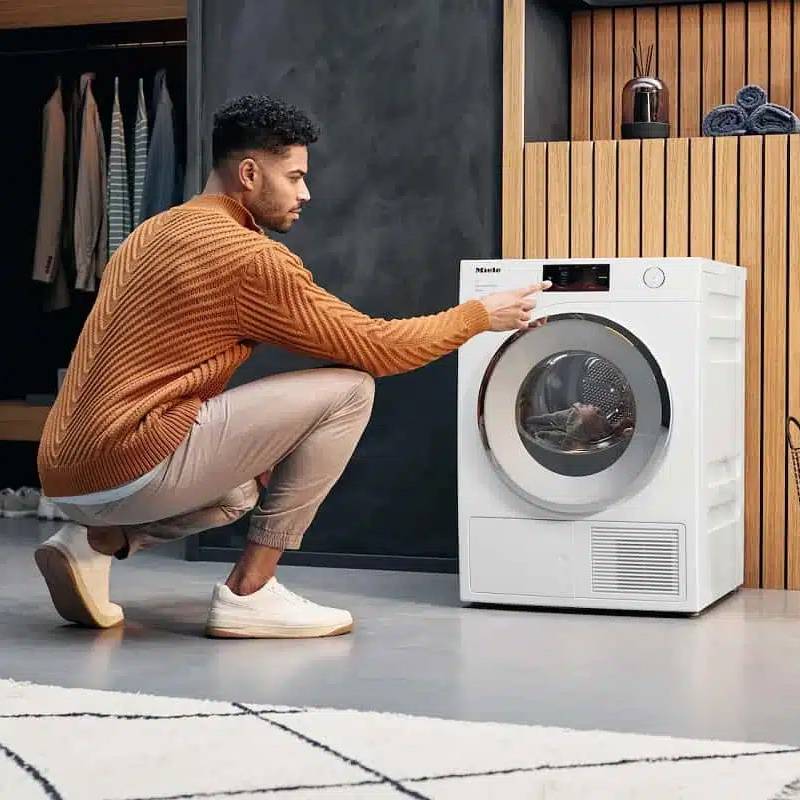
Best Compact Premium
Miele Dryers
24-inch compact front load ventless heat pump dryers.
SECTION 09
Delivery & Installation
Delivery day should be the easiest part of the buying process. Use this checklist to prepare your space, avoid common installation issues, and ensure everything is ready when your appliances arrive.
Day before checklist
Plumbing & Water Connections
- Confirm both hot and cold water shutoff valves are present and accessible.
- Check for signs of leaking, corrosion, or old valves that may need replacement.
- Verify the drain standpipe is present and not damaged.
- If replacing a very old washer, new machines may require updated hoses or connections.
Stacking Considerations
- If planning to stack, measure the total stacked height including any pedestals.
- Not all washers and dryers can be stacked — even within the same brand.
- A manufacturer-approved stacking kit is typically required and must be on-site at time of delivery.
Gas vs. Electric Dryer
- Confirm whether your existing hookup is gas or electric before purchasing.
- Gas dryers require a gas shutoff valve, an approved gas connection, and professional installation in many jurisdictions.
- Electric dryers require a 240V outlet — confirm this is in place before delivery day.
- This is one of the most common causes of failed deliveries — confirm before you buy.
Venting
- Check the vent path length and whether it vents outdoors.
- Some high-efficiency dryers have maximum vent-length requirements — check your model’s specs.
- A missing or inadequate dryer vent is one of the top reasons deliveries cannot be completed.
Flooring
- Make sure the floor is level and solid — uneven floors cause vibration, noise, and poor performance.
- Older homes may have weak or sloping floors that benefit from reinforcement before installation.
Water Drain Pan & Flood Protection
- If the laundry room is on a second floor or above finished living space, consider a drain pan under the machines.
- Leak detection devices and automatic water shutoff systems are available and worth considering for peace of mind.
Smart Features
- Many premium models offer app control, cycle notifications, and remote diagnostics.
- If you’re buying a smart-enabled machine, make sure you have reliable Wi-Fi signal in your laundry area before delivery day.
Day-of checklist
Step 1.
Someone 18 or older must be present at home for the delivery.
Step 2.
The team will uncrate your appliance, set it in place, level it, and remove all packaging.
Step 3.
Washer and dryer set-up is included — provided the request was made at time of purchase and all outlets, water valves, and cabinetry are accessible and ready.
Step 4.
Temporary floor protection is provided from your front door to the appliance location.
Step 5.
Old appliances will be removed — but they must be fully disconnected and emptied before the team arrives.
Step 6.
You will be asked to sign a waiver confirming the appliance was received in acceptable condition before the team leaves.
Step 7.
If you notice any concealed damage after delivery, contact your retailer within 48 hours.
Step 8.
If delivery requires an elevator, notify your retailer in advance so it can be arranged.
Caplan’s includes setup as part of their delivery service — not all retailers offer setup, so confirm with your retailer at time of purchase.
Measure your doorways, hallways, and stairwells — if the appliance does not fit, contact your retailer.
Clear a path from your front door to the laundry room.
Make sure water shut-off valves are accessible.
If stacking, the stacking kit must be on-site at time of delivery.
Condo installs require metal hoses — purchase from a hardware store before delivery day.
Washer must be within 4ft of a 110V grounded outlet. Dryer must be within 4ft of a 240V grounded outlet.
SECTION 10
Owning Your Machine
Simple maintenance habits can extend performance, prevent odour, and reduce repair issues.
EVERY LOAD
1. Clean the lint trap in your dryer after every single load — it’s a fire hazard, not just an inconvenience
2. For front loaders, wipe the rubber door seal after every wash and leave the door open to air out
MONTHLY
Run a cleaning cycle monthly using a washing machine cleaner — it prevents buildup and odour before you ever notice them
ANNUALLY
Check your dryer vent annually — clogged vents are the number one cause of dryer fires
SECTION 11
The Laundry Cheat Sheet
24″
Typical compact machine width
Designed for condos, apartments, and laundry closets where space is limited.
27″
Standard full-size machine width
The most common size for family households, offering larger capacities and more features.
4.7 cu. ft.
Recommended capacity for a family of four
Provides enough space for everyday loads, bedding, and towels without overloading.
3/4
Ideal maximum fill level
Leaving some room in the drum improves cleaning performance and helps protect fabrics.
15–30 Mins
Extra minutes for heat pump drying cycles
Heat pump dryers use less energy but generally take longer than traditional vented models.
7–10 Years
Typical lifespan of a budget machine
Entry-level models can provide years of reliable service with proper maintenance.
15–20+ Years
Expected lifespan of a premium machine
High-end brands are often built for longer ownership and greater repairability.
Annaul Check
Inspect and clean the dryer vent annually
A yearly check helps maintain drying performance, improve efficiency, and reduce fire risk.
READY TO SHOP?
Bring your measurments.
We’ll help narrow the options.
This guide covers all the key decisions. If you still have questions — or want help narrowing it down based on your specific space or household — our team at Caplan’s is always happy to talk it through in store.
Visit the showroom or book a consultation with Caplan’s to compare washer and dryer options based on your space, lifestyle, and long-term needs.