





Most laundry problems aren’t dramatic. They’re the result of small habits: using too much detergent, overloading the drum, leaving a finished load sitting too long — repeated consistently over months and years. The damage compounds slowly, which is exactly why it’s so easy to miss. This blog covers the choices that matter most: detergent type and quantity, and the common mistakes that shorten the life of both your clothes and your machine.
Detergent — Type, Format, and How Much to Actually Use
Detergent choice matters more than most people realize — not just for how clean your clothes come out, but for the long-term health of your machine.
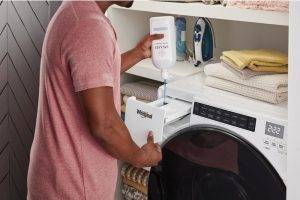
High efficiency (HE) detergent is formulated specifically for high-efficiency washing machines — which includes all front-load washers and most modern top-loaders. HE machines use significantly less water than traditional machines, and standard detergent produces far too many suds in a low-water environment. Those excess suds don’t simply rinse away. They leave residue on your clothes and inside the drum, and over time contribute directly to the odour and buildup problems that front-loaders are known for. If your machine is HE, use HE detergent. It will be marked clearly on the packaging.
The most common detergent mistake: over-pouring. For a standard load in an HE machine, you typically need about one to two tablespoons of liquid detergent, far less than the fill lines on most caps suggest. Those lines are designed for full loads in conventional machines. Check the back of the packaging for your specific machine type and load size. When in doubt, use less rather than more.
Liquid, Powder, or Pods?
Each format has a place — the right one depends on your machine, your water temperature habits, and your load type.
- Liquid detergent — The most versatile format. Dissolves reliably in all water temperatures and works well for pre-treating stains directly on fabric before the wash. The right default for most households.
- Powder detergent — Often the most economical option, and performs well for general loads. The limitation: it can leave residue if not fully dissolved in cold water. Less ideal if cold washing is your default.
- Laundry Pods — Convenient and pre-measured, which eliminates over-pouring. The trade-off: pods can under-dissolve in very short or very cold cycles, leaving a gel residue on clothes. If you use pods regularly, avoid express or quick-wash cycles at cold temperatures.
Five Small Habits That Do the Most Damage
The most common laundry mistakes aren’t dramatic. They’re small, repeated choices that compound over time into damaged clothes and machines that wear out before they should.
1. Ignoring Care Labels
The care label exists for a reason, and the information on it is specific to that garment’s construction — the fibre content, the dye process, the structural details that determine how it should be washed and dried. It’s the most straightforward mistake to avoid, and consistently one of the most ignored.
A machine with a dedicated delicate or hand-wash cycle makes following those labels significantly easier. If your current machine doesn’t have one, it’s worth factoring into your next purchase.
2. Overwashing
Overwashing wears out fabric faster than almost anything else. Denim doesn’t need to be washed after every wear, in fact repeated washing fades the colour and weakens the construction over time. The same applies to most outerwear and many casual garments that aren’t in direct contact with skin. The standard that makes sense for most households: wash what touches your skin after every wear. Wash everything else when it actually needs it.
3. Overloading the Drum
Overloading is one of the most common causes of poor cleaning results and accelerated mechanical wear — and it usually doesn’t look like overloading until you notice the results. When a drum is too full, clothes can’t move freely through the water. Detergent doesn’t distribute evenly. The spin cycle becomes unbalanced, causing the machine to vibrate, knock, and in some cases stop mid-cycle to protect itself. The three-quarters rule is a reliable guide: fill the drum about three-quarters of the way for the best results.
Machines with load-sensing technology adjust water levels and cycle intensity automatically based on what’s in the drum — and some will flag when a load is too heavy. If you frequently run large loads, load-sensing is a feature worth prioritizing
4. Leaving Wet Clothes in the Machine
Leaving wet clothes sitting in the machine after a cycle ends is a reliable way to create mildew smell, both in the clothes and in the drum itself. Front-loaders are particularly susceptible because the door seals tightly and moisture has nowhere to go once the cycle is done.
Some machines include a feature that periodically tumbles the drum after the cycle ends to keep air moving through the load. If this is available on your machine, it’s worth enabling. If not, moving laundry promptly is the simplest solution.
5. Using Too Much Detergent
Using too much detergent leaves residue on clothes and builds up inside the machine over time. It’s one of the leading contributors to front-loader odour, and it’s entirely preventable. Follow the dosing instructions on the packaging for your specific machine type and load size. For HE machines, this is almost always less than you’d expect.
The right laundry appliances can make much of the process feel effortless, simplifying both your laundry routine and your everyday life. If you’d like help finding the best washer and dryer for your household’s needs, the team at Caplan’s Appliances is here to help.